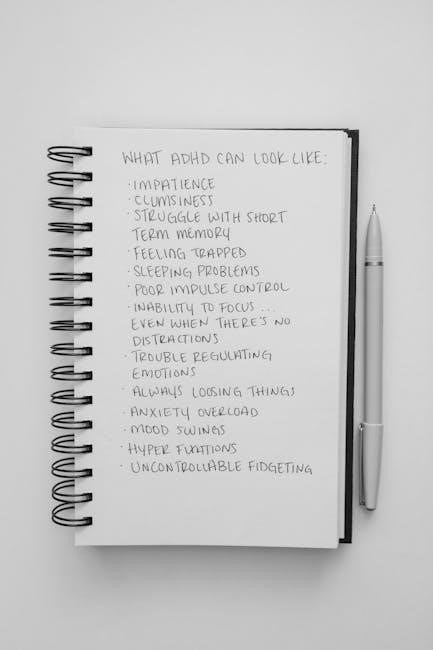
ADHD Worksheets PDF: A Comprehensive Guide (Updated December 21, 2025)
Navigating the world with ADHD often benefits from structured support, and ADHD worksheets in PDF format offer accessible tools.
These resources, from CHADD and How to ADHD,
aid in goal-setting, planning, and coping skills,
providing a practical approach to managing symptoms.
Discover free printables for adults and children,
regularly updated collections of ADHD worksheets,
resources, and printable PDFs,
empowering individuals to take control of their focus and organization.
Utilize workbooks containing the best ADHD worksheets,
designed to help manage ADHD with effective strategies,
including CBT, anger management, and self-esteem building,
all conveniently available in PDF format.
What is ADHD? Understanding the Basics
Attention Deficit Hyperactivity Disorder (ADHD) is recognized as a group of behavioral symptoms impacting both children and adults, characterized primarily by inattentiveness and impulsiveness. It’s crucial to understand that ADHD isn’t simply a lack of focus; it’s a neurodevelopmental condition affecting executive functions – the mental processes that enable us to plan, organize, and regulate actions.
These challenges manifest differently in individuals, leading to variations in symptom presentation. While often associated with hyperactivity, particularly in children, ADHD can present as primarily inattentive, primarily hyperactive-impulsive, or a combination of both. This complexity underscores the importance of personalized approaches, where tools like ADHD worksheets can be tailored to specific needs.

Understanding the underlying neurological basis of ADHD is key. It’s linked to differences in brain structure and function, particularly in areas responsible for attention, impulse control, and emotional regulation. Recognizing this biological component helps destigmatize the condition and encourages proactive management through strategies, including utilizing readily available PDF worksheets for symptom tracking and habit development;
Ultimately, grasping the fundamentals of ADHD – its neurobiological roots, diverse symptom profiles, and impact on executive functions – is the first step towards effective support and self-management, paving the way for utilizing resources like ADHD worksheets to build coping mechanisms.
Common ADHD Symptoms in Adults
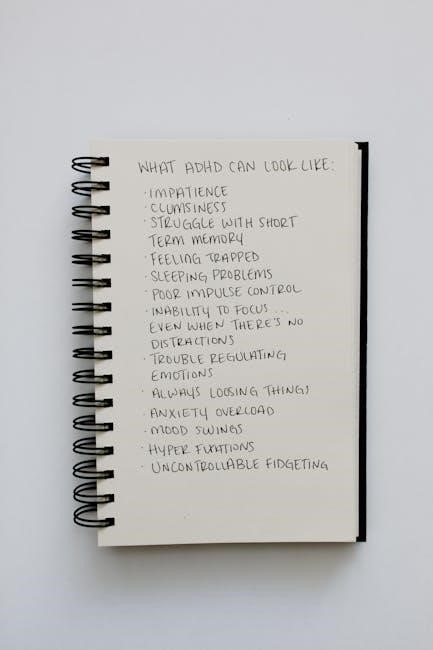
Adult ADHD often presents differently than in childhood, shifting from overt hyperactivity to more subtle, internal struggles. Common symptoms include persistent difficulties with organization, time management, and prioritizing tasks – areas where ADHD worksheets focusing on planning can be incredibly beneficial.
Emotional dysregulation is also prevalent, manifesting as heightened sensitivity, irritability, and difficulty managing frustration. This can lead to impulsive reactions and strained relationships. Worksheets designed for emotional regulation, readily available as PDFs, offer tools for identifying triggers and developing coping strategies.
Many adults with ADHD experience chronic procrastination, difficulty completing tasks, and a tendency to become easily distracted. These challenges can significantly impact work performance, personal relationships, and overall quality of life; Symptom tracker logs, often found within ADHD worksheet collections, can help identify patterns and inform interventions.
Furthermore, adults may struggle with low self-esteem, stemming from years of perceived failures and difficulties meeting societal expectations. Self-esteem building worksheets, accessible in PDF format, can provide a structured approach to challenging negative self-talk and fostering self-compassion.
Common ADHD Symptoms in Children
Children with ADHD typically exhibit a combination of inattentiveness, hyperactivity, and impulsivity. Inattentiveness manifests as difficulty sustaining attention, frequent careless mistakes, and struggles with organization – areas where targeted ADHD worksheets can provide support.
Hyperactivity often presents as excessive fidgeting, difficulty staying seated, and constant movement, while impulsivity can lead to interrupting others, blurting out answers, and difficulty waiting their turn. These behaviors can create challenges in school and social settings.
Emotional regulation is also frequently impaired, leading to outbursts, frustration, and difficulty managing emotions. Worksheets focused on emotional identification and coping skills, available as downloadable PDFs, can be valuable tools for parents and educators.
Parent resources, like symptom tracker logs, are particularly helpful in monitoring a child’s behavior and identifying patterns. These logs, often included in ADHD worksheet packages, can aid in communication with healthcare professionals and inform treatment plans. Utilizing these resources can foster a more understanding and supportive environment.

Types of ADHD Worksheets & Resources
Diverse ADHD worksheets in PDF format target specific challenges. Resources cover time management, organization, emotional regulation, and impulse control,
offering tailored support for individuals navigating ADHD.
Worksheets for Time Management & Planning
Effective time management is often a significant hurdle for individuals with ADHD, and dedicated worksheets provide structured support. These PDF resources focus on breaking down tasks into manageable steps, a technique frequently highlighted by strategies like the Pomodoro method, as discussed on How to ADHD.
Goal-setting worksheets are crucial, helping to define achievable objectives and create realistic timelines. Symptom tracker logs, often included as one-page daily grids, can indirectly aid planning by identifying peak focus times and potential distractions.
Worksheets may incorporate prioritization matrices, enabling users to distinguish between urgent and important tasks. Furthermore, planning templates can facilitate daily or weekly scheduling, promoting a sense of control and reducing overwhelm. The emphasis is on creating visual aids and structured systems to counteract the challenges of inattention and impulsivity.
Utilizing these tools fosters a proactive approach to time, transforming daunting projects into attainable milestones, ultimately enhancing productivity and reducing stress associated with ADHD.
Worksheets for Organization Skills
Individuals with ADHD often experience difficulties with organization, impacting various aspects of life. Fortunately, specialized worksheets in PDF format offer targeted strategies to address these challenges. These resources emphasize creating structured systems to manage belongings, information, and tasks effectively.
Worksheets may include checklists for decluttering spaces, breaking down the overwhelming process into smaller, manageable steps. Visual organizers, such as mind maps or flowcharts, can aid in structuring thoughts and ideas, promoting clarity and reducing mental clutter.
Templates for creating to-do lists, categorized by priority or context, are also common. These tools encourage a proactive approach to task management, minimizing the likelihood of forgotten commitments. Furthermore, worksheets can guide users in establishing designated places for frequently used items, fostering a sense of order.
By consistently utilizing these organizational tools, individuals with ADHD can cultivate habits that promote efficiency, reduce stress, and enhance overall functionality in daily life.
Worksheets for Emotional Regulation
ADHD often co-occurs with heightened emotional sensitivity and challenges in regulating emotional responses. Thankfully, worksheets specifically designed for emotional regulation, available in PDF format, provide valuable tools for managing these difficulties. These resources focus on identifying, understanding, and modifying emotional patterns.
Worksheets frequently incorporate techniques from Cognitive Behavioral Therapy (CBT), guiding users to recognize negative thought patterns that contribute to emotional distress. Thought records help individuals challenge and reframe unhelpful thoughts, promoting a more balanced perspective.
Emotion tracking logs encourage self-awareness by prompting users to identify and label their feelings throughout the day. Worksheets may also offer strategies for coping with intense emotions, such as deep breathing exercises or mindfulness techniques.

Furthermore, resources can assist in developing healthy coping mechanisms for managing frustration, anger, and anxiety, fostering emotional resilience and improving overall well-being. Consistent practice with these tools can empower individuals with ADHD to navigate emotional challenges more effectively.
Worksheets for Impulse Control
Impulsivity is a core symptom of ADHD, often leading to challenges in decision-making and behavior. Fortunately, worksheets specifically targeting impulse control, readily available as PDFs, offer practical strategies for managing these tendencies. These resources aim to increase self-awareness and develop techniques to pause before acting.
Worksheets frequently incorporate exercises focused on identifying triggers that lead to impulsive behaviors. By recognizing these cues, individuals can proactively implement coping mechanisms. Delaying gratification exercises help build the ability to resist immediate rewards in favor of long-term goals.
Behavior charts and tracking logs allow individuals to monitor impulsive actions and identify patterns. These tools promote accountability and provide valuable insights into personal triggers and responses.
Additionally, resources may include problem-solving worksheets to explore alternative solutions to challenging situations, reducing the likelihood of impulsive reactions. Consistent practice with these techniques can significantly improve impulse control and enhance overall functioning for individuals with ADHD.

Popular ADHD Worksheet Categories
Numerous ADHD worksheet categories, available as PDFs, address specific needs. CBT, anger management, self-esteem, and relaxation techniques are frequently included,
offering targeted support for individuals navigating ADHD challenges.
CBT (Cognitive Behavioral Therapy) Worksheets for ADHD
Cognitive Behavioral Therapy (CBT) worksheets are a cornerstone of many ADHD management plans, readily available in PDF format. These tools focus on identifying and modifying negative thought patterns and behaviors that often accompany ADHD. They help individuals challenge unhelpful beliefs and develop more adaptive coping strategies.
Specifically, CBT worksheets for ADHD often include thought records to track situations, thoughts, feelings, and behaviors. This process promotes self-awareness and allows for the identification of cognitive distortions. Behavior charts can assist in monitoring and reinforcing positive behaviors, while also addressing impulsive actions.
Furthermore, worksheets may guide users through techniques like cognitive restructuring, where they learn to reframe negative thoughts into more balanced and realistic ones; These resources empower individuals to take an active role in managing their ADHD symptoms by changing how they think and act, ultimately improving emotional regulation and overall well-being. Free ADHD worksheets often incorporate CBT principles.
Worksheets for Anger Management in ADHD
Individuals with ADHD often experience heightened emotional sensitivity and difficulty regulating emotions, leading to frequent outbursts of anger. Worksheets specifically designed for anger management, available as downloadable PDFs, provide structured techniques to address these challenges.
These resources typically begin with identifying anger triggers – situations, thoughts, or feelings that provoke anger. Worksheets then guide users through exploring the physical sensations associated with anger, promoting body awareness. Techniques like deep breathing exercises and progressive muscle relaxation are often included to calm the nervous system.
Moreover, anger management worksheets for ADHD encourage the development of assertive communication skills, allowing individuals to express their needs and boundaries effectively without resorting to aggression. They also promote problem-solving strategies to address the underlying issues contributing to anger. Free ADHD worksheets frequently include sections dedicated to emotional regulation and anger control, offering practical tools for daily use.
Self-Esteem Building Worksheets for ADHD
Living with ADHD can often lead to feelings of inadequacy, frustration, and low self-esteem due to consistent challenges with focus, organization, and impulse control. Self-esteem building worksheets, readily available as PDF downloads, offer targeted exercises to counteract these negative self-perceptions.
These worksheets commonly begin with identifying personal strengths and accomplishments, encouraging individuals to recognize their positive qualities beyond their ADHD-related struggles. Activities often involve challenging negative self-talk and replacing it with more realistic and compassionate affirmations. Gratitude journaling prompts are frequently included to foster a sense of appreciation for positive aspects of life.
Furthermore, worksheets may guide users through setting achievable goals and celebrating small victories, reinforcing a sense of competence and self-efficacy. Free ADHD worksheet collections often feature sections dedicated to self-compassion and positive self-image, providing valuable tools for cultivating a healthier relationship with oneself and boosting overall well-being.
Worksheets for Relaxation & Stress Management
Individuals with ADHD frequently experience heightened levels of stress and anxiety due to the constant demands of managing their symptoms. Relaxation and stress management worksheets, available in PDF format, provide practical techniques to mitigate these challenges and promote a sense of calm.
Commonly, these worksheets incorporate mindfulness exercises, guiding users through focused breathing techniques and sensory awareness practices. Progressive muscle relaxation scripts are often included, helping to release physical tension and reduce overall arousal. Cognitive restructuring exercises challenge anxious thoughts and promote more balanced perspectives.
Free ADHD worksheet resources often feature sections dedicated to identifying personal stressors and developing coping strategies. Worksheets may also explore the benefits of grounding techniques, visualization exercises, and creating personalized self-care plans. These tools empower individuals to proactively manage stress, improve emotional regulation, and enhance their overall quality of life.

Free ADHD Worksheet Resources
Explore readily available, cost-free ADHD worksheets in PDF format from organizations like CHADD, offering support and guidance.
Discover valuable resources and strategies
from How to ADHD, plus Pinterest collections
to enhance focus and organization.
CHADD (Children and Adults with Attention-Deficit/Hyperactivity Disorder) Resources
CHADD, a leading organization dedicated to supporting individuals with ADHD, provides a wealth of free resources, including downloadable worksheets in PDF format. The National Resource Center on ADHD, a program of CHADD, is funded through a cooperative agreement and offers evidence-based information and practical tools.
These resources are designed to assist individuals, families, and professionals in understanding and managing ADHD. You’ll find materials covering various aspects of ADHD, from symptom management to strategies for success in school, work, and relationships. CHADD’s offerings are particularly valuable for parents seeking resources to support their children.
Specifically, CHADD provides access to worksheets that can aid in tracking symptoms, developing organizational skills, and implementing behavioral strategies. These PDFs are easily accessible and can be integrated into a daily routine to promote positive change. The information provided by CHADD is a trusted source, backed by research and expert knowledge, making it an invaluable starting point for anyone seeking support with ADHD.
How to ADHD Resources & Strategies
Jessica’s “How to ADHD” channel offers a friendly and positive environment brimming with tips, tricks, and information for navigating life with ADHD. While not solely focused on downloadable PDF worksheets, the channel provides invaluable strategies that complement worksheet use and can inspire personalized resource creation.
The core of How to ADHD’s approach lies in understanding why ADHD brains function as they do, and then applying that knowledge to develop practical solutions. Strategies like the Pomodoro Technique, discussed on the channel, can be effectively tracked using symptom logs or time management worksheets.
Although direct PDF downloads aren’t the primary focus, the channel’s content frequently references tools and techniques that can be readily implemented using readily available worksheet templates. The emphasis is on building systems and habits, and the channel’s insights can significantly enhance the effectiveness of any ADHD worksheet system you choose to implement, fostering a more holistic approach to management.
Pinterest Collections of ADHD Worksheets
Pinterest serves as a vibrant hub for discovering a diverse range of ADHD worksheets, curated by users and organized into themed collections. A quick search for “adhd worksheets” reveals a wealth of printable resources, spanning various categories like time management, emotional regulation, and organization skills.
These collections often aggregate free worksheets from various sources, offering a convenient starting point for individuals seeking targeted support. Users can explore hand-picked Pins, categorized by specific needs, such as worksheets for children, adults, or those focusing on particular ADHD symptoms.
However, it’s crucial to exercise discernment when utilizing Pinterest resources. While many worksheets are created by qualified professionals, others may lack evidence-based backing. Always evaluate the source and consider consulting with a healthcare provider before implementing any new strategies. Pinterest provides a fantastic starting point, but critical evaluation is key to ensuring the resources align with individual needs and professional guidance.
Specific Worksheet Examples
Explore symptom tracker logs for daily monitoring of sleep, medication, mood, and focus. Utilize goal-setting worksheets to define objectives,
and develop positive habits through coaching techniques,
available as convenient PDF downloads.
Symptom Tracker Logs for ADHD
Symptom tracker logs are invaluable tools for individuals with ADHD, offering a structured method to monitor daily experiences and identify patterns. These logs, frequently available as downloadable PDFs, typically feature a one-page daily grid designed for comprehensive tracking. Key elements often include sections to record sleep patterns, medication timing and effectiveness, daily mood fluctuations, and a subjective rating of focus levels – often on a scale of 1 to 5 or 1 to 10.
The benefit of consistent tracking lies in the ability to correlate symptoms with external factors. For example, noting a decline in focus after a poor night’s sleep or observing increased impulsivity around specific triggers. This data can be incredibly insightful when discussing treatment plans with healthcare professionals, providing concrete evidence to support adjustments in medication or therapy.
Parent resources specifically designed for children with ADHD often incorporate symptom tracker logs as a means of collaborative observation. Sharing these logs with teachers or therapists can foster a more holistic understanding of the child’s challenges and strengths, leading to more effective interventions. Regularly reviewing completed logs empowers individuals to become more self-aware and proactive in managing their ADHD symptoms.
Goal-Setting Worksheets for ADHD
Goal-setting can be particularly challenging for individuals with ADHD, often due to difficulties with planning, prioritization, and sustained attention. Fortunately, specialized worksheets, readily available as PDFs, provide a structured framework to overcome these hurdles. These worksheets typically guide users through breaking down large, overwhelming goals into smaller, more manageable steps, fostering a sense of accomplishment with each milestone achieved.
Effective goal-setting worksheets often incorporate elements of SMART goals – Specific, Measurable, Achievable, Relevant, and Time-bound. This ensures that goals are clearly defined and realistically attainable, reducing the likelihood of discouragement. Many worksheets also include sections for identifying potential obstacles and developing proactive strategies to address them, promoting resilience and problem-solving skills.
Furthermore, these resources frequently emphasize the importance of self-compassion and celebrating progress, recognizing that setbacks are a natural part of the process. Utilizing goal-setting worksheets as part of a broader ADHD management strategy can significantly enhance motivation, improve executive function, and ultimately empower individuals to achieve their aspirations.
Worksheets for Developing Positive Habits
Individuals with ADHD often experience challenges in establishing and maintaining consistent routines and positive habits, frequently due to difficulties with impulse control and working memory. Thankfully, dedicated worksheets, often available as downloadable PDFs, offer targeted support in habit formation. These resources typically focus on identifying desired habits and breaking them down into small, achievable actions, minimizing overwhelm and maximizing success.
Effective habit-building worksheets often incorporate techniques like habit stacking – linking a new habit to an existing one – and implementation intentions – specifying when, where, and how a habit will be performed. They may also include prompts for tracking progress, identifying triggers, and rewarding positive behaviors, reinforcing desired actions.
Crucially, many worksheets address the underlying neurological factors contributing to habit challenges in ADHD, such as the fight, flight, or freeze response. By understanding these mechanisms, individuals can develop self-coaching strategies to navigate impulses and cultivate more adaptive behaviors, ultimately leading to improved self-regulation and well-being.

Creating Your Own ADHD Worksheet System
Personalizing your approach with ADHD worksheets—PDFs from resources like CHADD—is key. Combine tools for holistic support, track progress, and adapt as needed,
seeking professional guidance when beneficial.

Combining Worksheets for a Holistic Approach
Truly effective ADHD management rarely relies on a single worksheet; instead, a holistic system integrating various tools proves far more beneficial. Consider pairing a Symptom Tracker Log – noting sleep, medication, and focus – with a Goal-Setting Worksheet to translate awareness into actionable steps.
Furthermore, integrate Worksheets for Developing Positive Habits alongside CBT (Cognitive Behavioral Therapy) Worksheets. This combination addresses both behavioral patterns and underlying thought processes, fostering lasting change. Don’t underestimate the power of incorporating Worksheets for Relaxation & Stress Management, especially when coupled with Worksheets for Emotional Regulation, to build resilience.
Utilizing PDFs from resources like CHADD and “How to ADHD” allows for easy access and customization. Experiment with different pairings, observing which combinations yield the most significant improvements in focus, organization, and emotional wellbeing. Remember, the ideal system is uniquely tailored to your individual needs and challenges, evolving as you learn and grow.
Tracking Progress & Adapting Your System
Consistent monitoring is crucial when utilizing ADHD worksheets. Regularly reviewing completed Symptom Tracker Logs reveals patterns – identifying triggers, successful coping mechanisms, and areas needing further attention. This data informs necessary adjustments to your worksheet combination and overall strategy.
Don’t view your initial system as fixed; it’s a dynamic tool requiring ongoing refinement. If a particular worksheet consistently feels unproductive or overwhelming, replace it with an alternative from available ADHD resources, like those offered by CHADD or “How to ADHD”.
Consider incorporating weekly or monthly review sessions to assess progress towards goals established using Goal-Setting Worksheets. Celebrate small victories and acknowledge setbacks without self-criticism. Remember, adaptation is key – a flexible system, built upon PDF worksheets, empowers you to navigate the challenges of ADHD effectively and sustainably.
When to Seek Professional Help Alongside Worksheets
While ADHD worksheets, readily available as PDFs, are valuable self-management tools, they aren’t a substitute for professional guidance. If symptoms significantly impair daily functioning – impacting work, relationships, or overall well-being – seeking support from a qualified healthcare professional is essential.
Worksheets can complement therapy, providing tangible exercises to reinforce concepts learned in sessions. A psychological nurse practitioner, as one individual found, can offer personalized strategies and diagnosis. Consider professional help if you experience persistent emotional distress, difficulty with impulse control, or co-occurring conditions.
Remember, self-help resources like those from CHADD and “How to ADHD” are excellent starting points, but a professional can provide a comprehensive assessment and tailored treatment plan. Utilizing worksheets in conjunction with professional care maximizes the potential for positive outcomes and sustained improvement.